Overview:
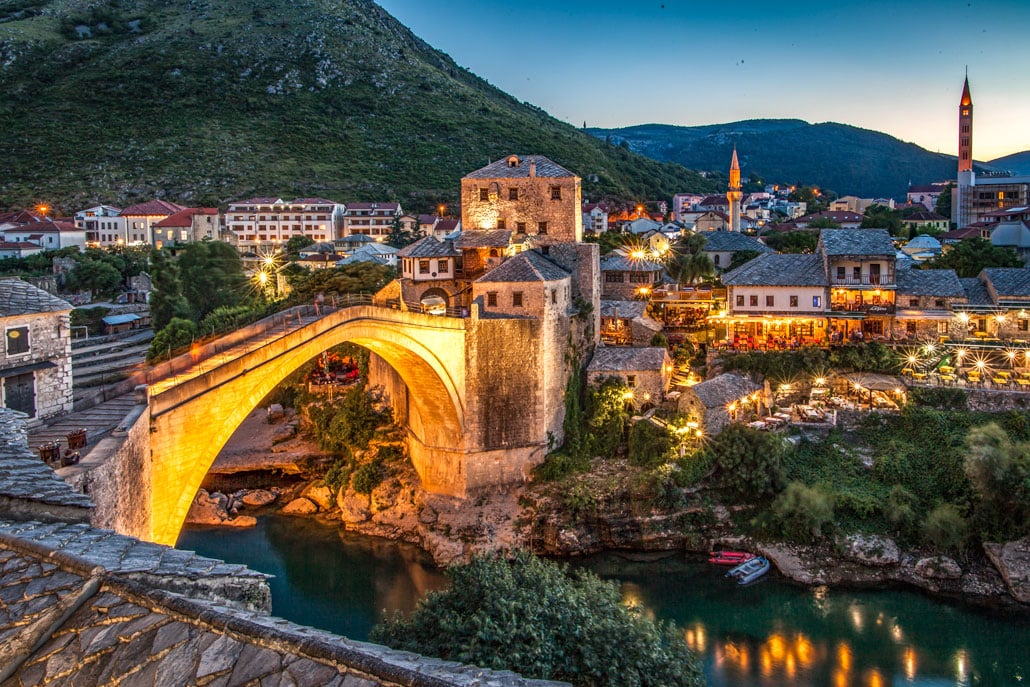
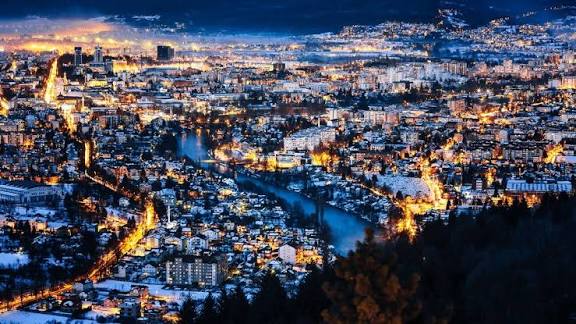
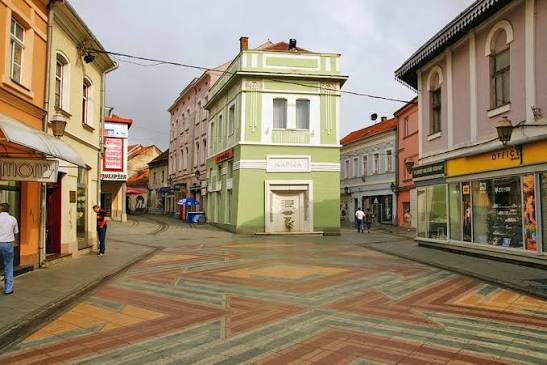
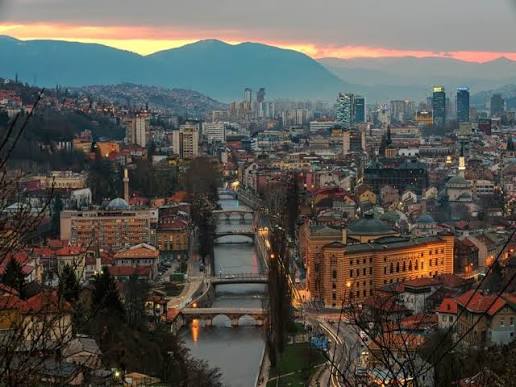
Sarajevo is the capital and largest city of Bosnia and Herzegovina. It serves as the political, cultural, and economic hub of the country. Situated in a valley along the Miljacka River and surrounded by the Dinaric Alps, Sarajevo has long been a crossroads of civilizations, religions, and cultures. Its unique blend of Ottoman, Austro-Hungarian, and modern European influences has shaped its architecture, culture, and identity.
History:
Sarajevo’s history dates back to the 15th century during the Ottoman Empire, when it became a regional center of trade, administration, and culture. The city’s strategic location along trade routes connecting the Adriatic Sea to Central Europe contributed to its growth. The Ottomans established mosques, bazaars, and public baths, many of which still exist today.
In 1878, following the Congress of Berlin, Austria-Hungary occupied Bosnia and Herzegovina, bringing Western architectural styles, infrastructure, and educational institutions. Austro-Hungarian influence is evident in the neo-Renaissance buildings, the National Museum, and the Sarajevo City Hall (Vijećnica), which remains an iconic symbol of the city.
Sarajevo gained international attention in 1914 as the site of the assassination of Archduke Franz Ferdinand of Austria, an event that triggered World War I. Throughout the 20th century, Sarajevo continued to play a vital role, especially as the capital of the Socialist Republic of Bosnia and Herzegovina within Yugoslavia.
The 1990s were a turbulent period for Sarajevo, as the city endured the longest siege in modern history during the Bosnian War (1992–1996). The siege caused immense destruction, but Sarajevo has since undergone extensive reconstruction, blending historical preservation with modern urban development.
Geography & Climate:
Sarajevo is located in the Sarajevo valley, bordered by mountains including Trebević, Bjelašnica, and Igman. The Miljacka River flows through the city center, providing a natural focal point. The surrounding mountains are not only scenic but also serve as venues for winter sports. In fact, Sarajevo hosted the 1984 Winter Olympics, leaving a lasting legacy in the form of sports infrastructure and international recognition.
The city has a continental climate with distinct seasons. Winters are cold and snowy, especially in the surrounding mountains, while summers are warm and humid. Spring and autumn are transitional seasons marked by moderate temperatures and rainfall. This climate supports lush greenery in and around the city, giving Sarajevo its picturesque landscapes.
Demographics:
Sarajevo is home to a diverse population that reflects its multicultural history. The city hosts Bosniaks (Bosnian Muslims), Serbs, Croats, and other ethnic groups. It is also a center of religious diversity, with mosques, Orthodox and Catholic churches, and synagogues coexisting within close proximity. This diversity shapes Sarajevo’s social and cultural life, making it a model of interfaith coexistence in the Balkans.
The city has a population of around 275,000 in the urban area, with the metropolitan area exceeding 400,000 people. Sarajevo attracts students, artists, and professionals from across Bosnia and Herzegovina, contributing to a vibrant urban culture.
Economy:
Sarajevo’s economy is diverse, encompassing government administration, services, trade, tourism, and light industry. It is the country’s political center, hosting the presidency, parliament, and other key institutions. Banking, insurance, and IT sectors have grown in recent decades, reflecting the city’s modernization and integration into the global economy.
Tourism is a major contributor to Sarajevo’s economy. Visitors are drawn by historical sites, cultural events, and winter sports. The city hosts annual festivals, such as the Sarajevo Film Festival, which attracts international filmmakers and audiences.
Culture & Society:
Sarajevo is often called the “Jerusalem of Europe” due to its religious diversity and tolerance. The city’s culture is a fusion of Ottoman, Austro-Hungarian, and modern influences. Traditional Bosnian music, cuisine, and crafts coexist with contemporary arts, theater, and literature.
The Old Town (Baščaršija) is the cultural heart, featuring cobblestone streets, artisan shops, and Ottoman-era architecture. Cafés serving Bosnian coffee provide a glimpse into daily life, while the numerous museums document the city’s rich past.
Landmarks & Tourism:
Key landmarks include:
- Baščaršija – Ottoman-era bazaar and cultural hub.
- Gazi Husrev-beg Mosque – a prominent example of Ottoman religious architecture.
- Latin Bridge – site of Archduke Franz Ferdinand’s assassination.
- Vijećnica (City Hall) – a symbol of Sarajevo, rebuilt after wartime destruction.
- Sarajevo Tunnel – a historic tunnel used during the Siege of Sarajevo, now a museum.
Winter sports enthusiasts can visit nearby mountains, while summer brings hiking, cultural festivals, and river activities.
Education & Institutions:
Sarajevo hosts several universities, including the University of Sarajevo, which is the largest and oldest in Bosnia and Herzegovina. The city also has numerous primary and secondary schools, cultural institutions, research centers, and libraries, making it a hub of education and innovation.
Transportation & Infrastructure:
Sarajevo has an extensive road network, public buses, and a small international airport connecting it to major European cities. Despite the city’s mountainous terrain, modern infrastructure facilitates commerce, tourism, and daily life. The Sarajevo cable cars offer scenic transportation to nearby mountains.