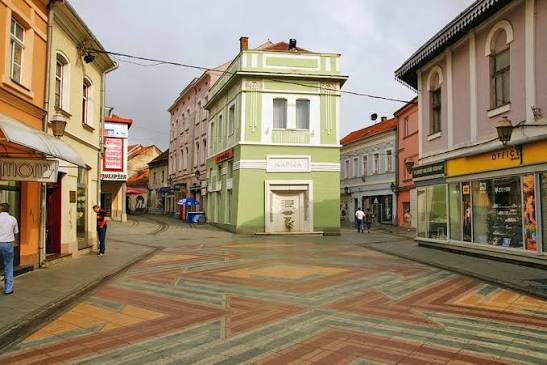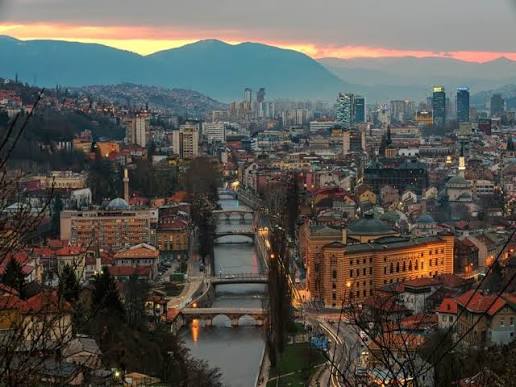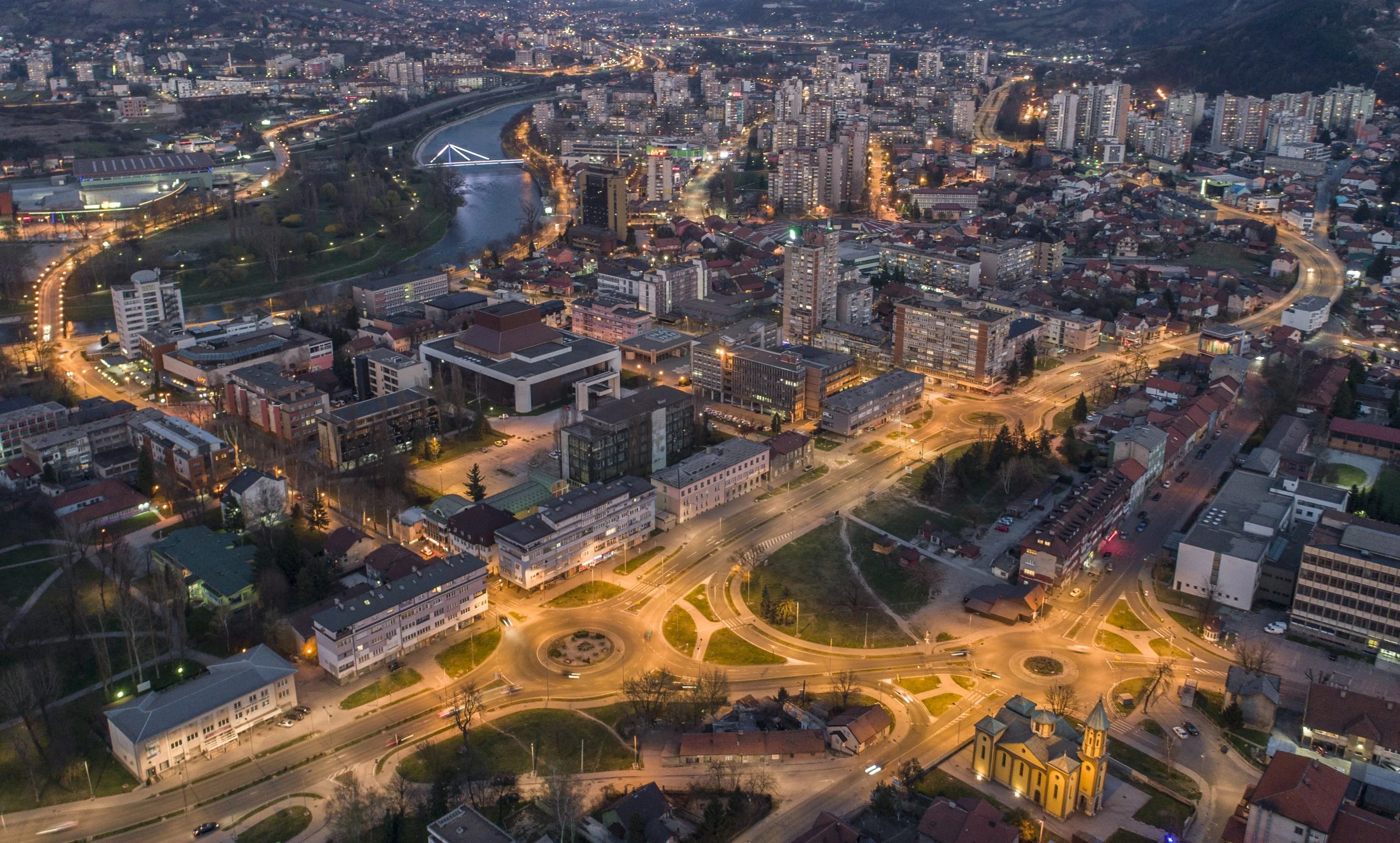
Bihać is a historic city in the northwestern part of Bosnia and Herzegovina, serving as the administrative center of Una-Sana Canton in the Federation of Bosnia and Herzegovina. Nestled along the Una River, Bihać is renowned for its natural beauty, river landscapes, and rich history. Often called the “Gateway to the Bosnian Wild”, Bihać combines cultural heritage, outdoor recreation, and a strategic position near the border with Croatia, making it a unique city in Bosnia and Herzegovina.
History:
Bihać’s history spans several centuries, with its roots traced back to medieval times. The area was originally inhabited by Illyrian tribes, later integrated into the Roman Empire. During the medieval period, Bihać developed as a fortified town under the Kingdom of Bosnia, serving as an important defensive and administrative center due to its strategic location along trade routes and near the Una River.
The Ottoman Empire captured Bihać in 1592, transforming the city into an important regional center. Ottoman influence brought mosques, bazaars, bridges, and public buildings that shaped the city’s cultural and architectural identity. The Ottoman-era Fethija Mosque remains one of the most significant historical landmarks in the city.
In 1878, Austria-Hungary took control of Bosnia and Herzegovina, bringing modernization, European architectural styles, infrastructure, and educational institutions. Railways, roads, and administrative buildings were constructed, facilitating Bihać’s integration into the broader Austro-Hungarian economic system.
During the 20th century, Bihać played a critical role during both World Wars due to its strategic location near borders and rivers. In the Bosnian War (1992–1995), Bihać was besieged and endured significant hardships, including military blockades and humanitarian crises. Despite these challenges, the city’s population displayed resilience, and post-war reconstruction restored cultural heritage sites, infrastructure, and the local economy.
Geography & Climate:
Bihać is located in a valley along the Una River, surrounded by the mountainous and forested terrain of northwestern Bosnia. The Una River is central to the city’s geography, flowing through the urban center and creating picturesque landscapes with rapids, waterfalls, and green riverbanks.
The city enjoys a continental climate with river-influenced microclimates. Summers are warm and suitable for outdoor activities like rafting and fishing, while winters are cold, with occasional snow. Rainfall is moderate, supporting lush vegetation along the river and in surrounding forests. Bihać’s natural environment, including the Una National Park, is one of the most pristine in Bosnia and Herzegovina, attracting nature enthusiasts, photographers, and eco-tourists.
Demographics:
Bihać has a population of approximately 60,000–65,000 in the city proper, with the surrounding metropolitan area bringing the total closer to 100,000. The population is predominantly Bosniak, with smaller communities of Croats, Serbs, and other ethnic groups. Bihać’s multiethnic past is reflected in its cultural institutions, religious sites, and social traditions.
The city is known for its youthful and active population, partly due to educational institutions and local economic activities. The community maintains strong ties to local culture, outdoor sports, and traditional crafts.
Economy:
Bihać’s economy historically centered around trade, agriculture, and small-scale industry. Today, tourism, energy, and services are increasingly important. The Una River plays a critical role, providing opportunities for hydropower, fishing, and water-based recreation.
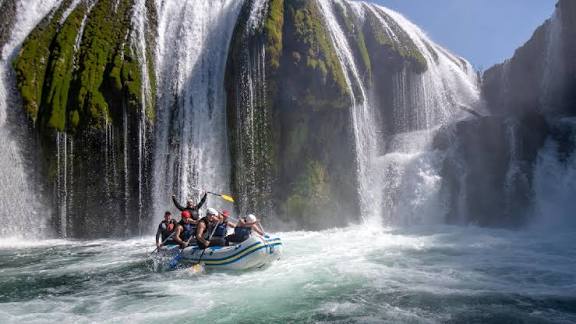
Tourism is a significant growth sector. Bihać’s location near Una National Park and the river rapids attracts rafting enthusiasts, kayakers, and hikers. Eco-tourism and adventure tourism have expanded in recent years, bringing new economic opportunities. Traditional crafts, markets, and local culinary specialties also support small businesses and cultural tourism.
The city’s industrial sector includes light manufacturing, food processing, and energy production, while small-to-medium enterprises contribute to trade, retail, and services. Post-war reconstruction and EU-supported development projects have helped revitalize Bihać’s economy, infrastructure, and social services.
Culture & Society:
Bihać’s cultural life reflects its Ottoman, Austro-Hungarian, and modern influences. The city hosts theaters, museums, and cultural centers that preserve history while promoting contemporary arts. Traditional music, dance, and crafts continue to play an important role in community life.
Cultural institutions include the Bihać Cultural Center, which organizes theater performances, concerts, exhibitions, and festivals, and the Museum of Una-Sana Canton, preserving artifacts, historical documents, and archaeological finds from the region. Annual events celebrate local heritage, folk music, and river-based sports, reinforcing community identity and civic pride.
Bihać’s society emphasizes resilience, environmental stewardship, and education. Community programs often focus on youth engagement, sports, and preserving natural and cultural heritage.
Landmarks & Tourism:
Key landmarks in Bihać include:
- Fethija Mosque – one of the oldest Ottoman mosques in the city, dating back to the 16th century.
- Bihać Old Town (Stari Grad) – a historic area with cobblestone streets, medieval fortifications, and Ottoman architecture.
- Una River and Waterfalls – natural attractions ideal for rafting, kayaking, fishing, and photography.
- Una National Park – a pristine natural reserve featuring forests, rivers, and diverse wildlife.
- Fortica Fortress – a medieval fortress offering panoramic views of the city and river valley.
Outdoor recreation is a major draw, with hiking trails, rafting tours, and camping opportunities attracting adventure tourists and nature lovers.
Education & Institutions:
Bihać hosts educational institutions including secondary schools, vocational centers, and faculties affiliated with the University of Bihać. The university provides programs in humanities, natural sciences, social sciences, and technical fields, supporting regional education and workforce development. Local institutions also emphasize environmental education and cultural heritage preservation.
Transportation & Infrastructure:
Bihać is connected to other cities via road networks, with highways linking it to Sarajevo, Zagreb, and other regional centers. The city has a small airport primarily used for domestic and regional flights, while road and bus services facilitate both passenger and commercial transport. Bridges over the Una River are central to city infrastructure, and urban planning integrates riverfront spaces with parks, recreational areas, and cultural sites.