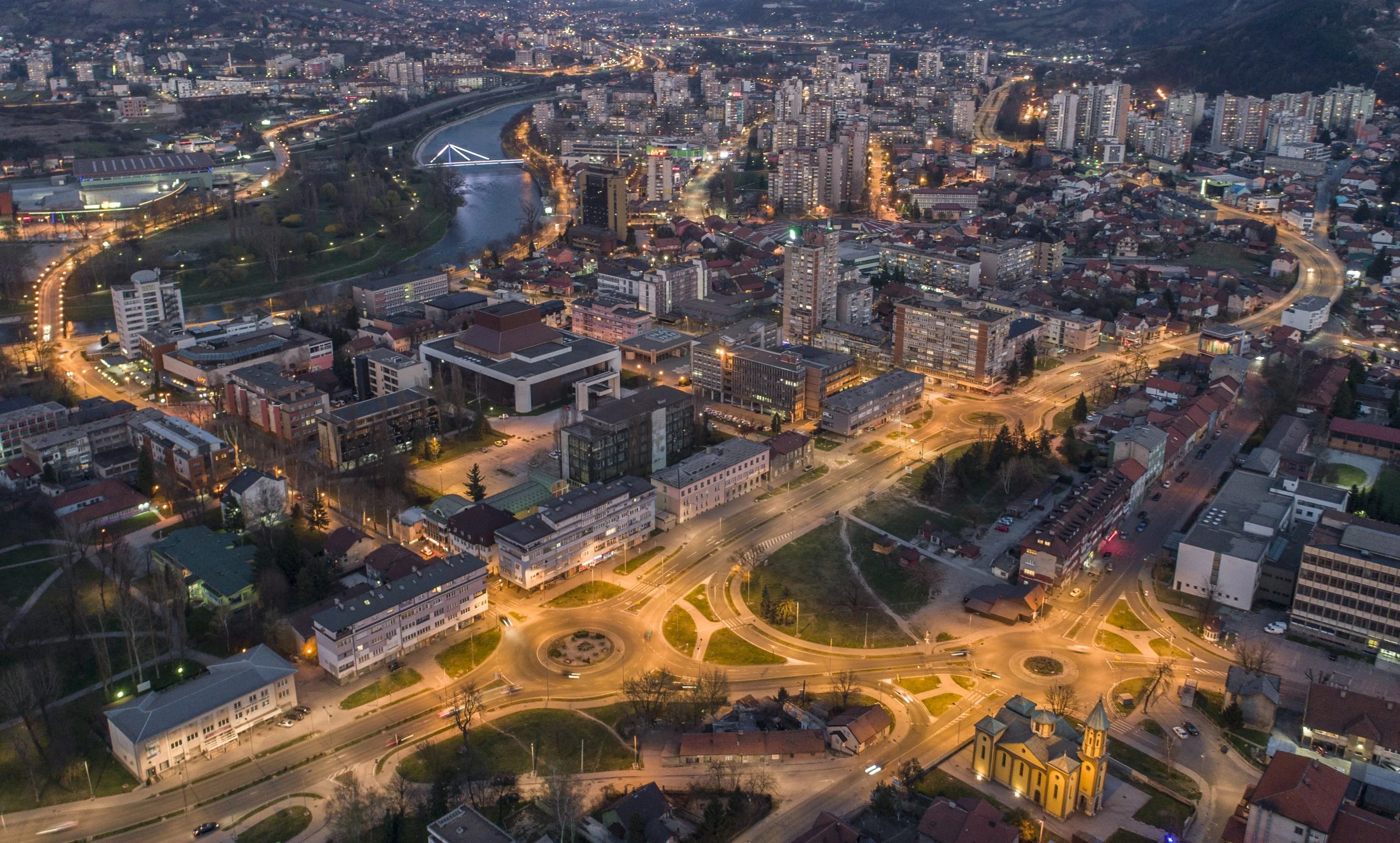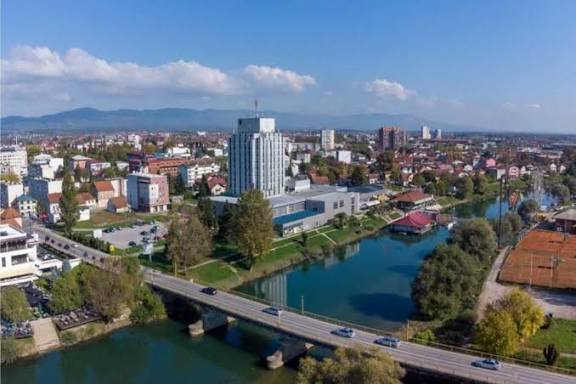
Prijedor is a prominent city in the northwestern part of Bosnia and Herzegovina, located in Republika Srpska. It serves as the administrative center of the Prijedor municipality and is strategically positioned along the Sana River, surrounded by fertile plains and gentle hills. Known for its industrial and agricultural contributions, Prijedor is a city where history, culture, and natural beauty converge. It is also recognized for its role in regional trade, education, and historical significance.
History:
Prijedor has a rich historical tapestry, with human settlement in the area dating back to prehistoric times. Archaeological evidence indicates that the region was inhabited by Illyrians, and later incorporated into the Roman Empire. Roman roads and settlements facilitated trade and military movement through this part of the Balkans.
During the medieval period, Prijedor was under the influence of the Bosnian Kingdom and served as a minor administrative and commercial hub. Its position along the Sana River made it a critical area for trade, agriculture, and defense. Ottoman rule began in the 16th century, bringing significant cultural and architectural changes. Mosques, bridges, and public buildings were constructed, shaping the urban layout and establishing the foundations of Prijedor’s historical core.
In the Austro-Hungarian period (1878–1918), Prijedor underwent modernization, with the construction of roads, railways, schools, and public buildings. The city became a regional industrial center, particularly in timber, agriculture, and small-scale manufacturing.
The 20th century saw further industrialization during the Kingdom of Yugoslavia and socialist Yugoslavia. Coal mining, wood processing, and the chemical industry became economic pillars of Prijedor. The Bosnian War (1992–1995) affected the city, including demographic changes and social challenges, but Prijedor has since worked to rebuild its infrastructure, economy, and cultural institutions.
Geography & Climate:
Prijedor is located in a valley along the Sana River, surrounded by low hills and fertile plains ideal for agriculture. The river plays a central role in the city’s geography, providing water for farming, industry, and recreation. The surrounding area features forests, meadows, and small mountains, making it attractive for outdoor activities and eco-tourism.
The city has a continental climate, with warm summers and cold winters. Summer temperatures can reach the high 20s Celsius (mid-80s Fahrenheit), while winters often bring snow and frost. Moderate rainfall supports agriculture, forest growth, and river ecosystems. Prijedor’s natural environment, including the nearby Kozara National Park, is important for biodiversity and tourism.
Demographics:
Prijedor has a population of approximately 90,000–100,000 in the city proper, with the surrounding municipality bringing the total to over 120,000. The population is primarily ethnic Serbs, with Bosniaks, Croats, and other groups also present. The city’s population reflects a blend of cultures, religions, and historical influences, contributing to its social diversity and resilience.
The city has a working-class tradition, shaped by its industrial and agricultural base. Families have historically relied on coal mining, agriculture, and trade, fostering strong community bonds and civic engagement.
Economy:
Prijedor’s economy is historically centered on industry and agriculture. Coal mining in the surrounding hills supplies local energy and industrial needs, while timber processing, chemical production, and manufacturing provide employment and economic stability. The city also produces agricultural goods, including grains, fruits, and vegetables, thanks to its fertile plains.
In recent years, Prijedor has diversified its economy, investing in services, retail, and small-to-medium enterprises. Tourism, particularly eco-tourism and cultural tourism, is an emerging sector, leveraging the city’s historical sites, river landscapes, and proximity to Kozara National Park. Local markets, artisan workshops, and cultural events contribute to both the economy and the city’s identity.
Culture & Society:
Prijedor has a rich cultural scene shaped by its Ottoman, Austro-Hungarian, and Yugoslav heritage. The city hosts cultural institutions such as theaters, libraries, and galleries, preserving historical traditions while promoting contemporary arts. Folk music, dance, and handicrafts remain integral to local culture, alongside modern cultural expressions.
The Prijedor Cultural Center organizes theater performances, concerts, and exhibitions, while the Museum of Prijedorpreserves archaeological, historical, and ethnographic collections. Annual festivals celebrate local music, folklore, and art, enhancing civic engagement and tourism.
The city places a strong emphasis on education, youth development, and community participation. Its society reflects resilience, adaptability, and pride in historical and natural heritage.
Landmarks & Tourism:
Key landmarks in Prijedor include:
- Stari Grad Fortress – historic fortifications overlooking the city and the Sana River.
- Churches and Mosques – reflecting the city’s multiethnic and religious history.
- Sana River Promenade – a scenic area for walking, cycling, and river-based activities.
- Kozara National Park – located nearby, featuring forests, wildlife, hiking trails, and historical monuments related to World War II.
- Old Town – historic streets, markets, and Ottoman-era architecture.
Outdoor recreation is popular, with river activities, hiking, and forest exploration attracting both locals and visitors. The combination of cultural landmarks and natural beauty makes Prijedor an appealing destination in northwestern Bosnia.
Education & Institutions:
Prijedor hosts primary and secondary schools, vocational training centers, and specialized educational institutions. While smaller than Sarajevo or Banja Luka, the city provides educational opportunities that support regional workforce development. Local initiatives often focus on technical education, agriculture, and industry-related training.
Transportation & Infrastructure:
Prijedor is well-connected by road and rail to other major cities in Bosnia and Herzegovina, including Banja Luka, Sarajevo, and Tuzla. Public transportation within the city includes buses and taxis. The Sana River has historically facilitated transport and trade, although modern infrastructure focuses on roads and industrial logistics. Bridges, promenades, and urban planning integrate riverfront areas with city life.