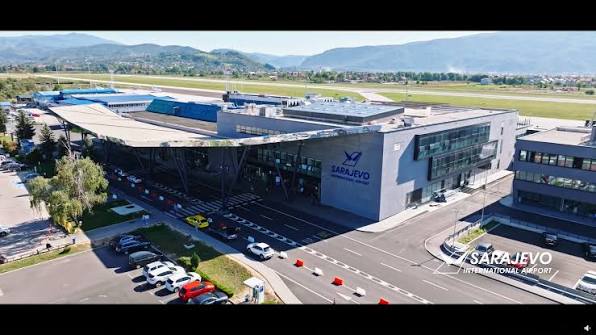
At first glance, Sarajevo International Airport may seem like a destination — and indeed it is, drawing visitors from all over the world to the heart of Bosnia and Herzegovina. But to understand Sarajevo Airport fully, you must also see it as a junction in a web of global travel — a connecting hub where flights intersect, where journeys continue beyond a single take‑off or landing, and where the rhythms of departure and arrival orchestrate the flow of people, cultures and stories.
When you talk about connecting flights via Sarajevo Airport, you’re exploring more than a logistical concept. You are stepping into the lived experience of transit — where anticipation meets sequencing, where one flight shapes access to another, and where strategic planning lets travelers weave Sarajevo into larger itineraries. Some journeys begin here, some pass through on their way elsewhere, and all of them illustrate how Sarajevo sits at the intersection of local and global travel.
Connecting Flights — What They Are
A connecting flight is more than two points linked by a stopover. It’s a sequence: an initial flight lands, passengers disembark, navigate the terminal and then board another aircraft to reach a final destination. At Sarajevo Airport, connections often involve:
- Short stays between flights
- Transfers through major European and Middle Eastern hub airports
- Passenger movement from one airline to another via coordinated or independent bookings
Unlike direct flights (which take you from one airport to another without stopping), connecting flights require coordination — of time, terminals, security processes and often visas. They are fluid parts of travel itineraries and, when planned well, turn a regional airport into an entry point to the wider world.
Why Sarajevo Is Part of Connecting Routes
Sarajevo International Airport today is connected directly to a network of cities across Europe, the Middle East and beyond. These include cities such as Vienna, Frankfurt, Istanbul, Zurich, London, Copenhagen, Paris, Warsaw, Belgrade, Zagreb and Dubai — each serving as a hub for onward connections to continents far beyond Bosnia and Herzegovina’s borders.
Direct daily and weekly flights link Sarajevo with these major centers, and from many of them — especially Istanbul and Frankfurt — passengers can easily transit to further destinations in Asia, Africa, the Americas and Australasia. In this way, Sarajevo becomes the first or second leg in much longer travel routes: it feeds into a global lattice of air routes.
Typical Connecting Routes via Sarajevo
Passengers who connect through Sarajevo often follow patterns dictated by airline networks and travel geography:
1. Through Istanbul (IST / SAW)
Istanbul stands out as one of the busiest connecting points for Sarajevo. Many flights between Sarajevo and far‑reaching destinations in Asia, Africa or the Middle East transit through Istanbul’s international gateways. This makes it a powerful hub where passengers can link to flights bound for Nairobi, Delhi, Singapore, or even Australia with single stopovers.
2. Through Frankfurt or Vienna
For travelers headed to Western Europe or transatlantic connections, Frankfurt and Vienna are key. These airports serve as conduits to virtually every major European capital and many cities in North America. A journey from Sarajevo via one of these hubs can lead onward to Canada, the eastern United States or even Central and South America.
3. Through Middle Eastern Hubs
Airports in the Gulf — particularly Dubai — also feature in Sarajevo itineraries. Connecting through such hubs opens routes to South Asia, Southeast Asia, Oceania and Africa. In many cases, a single layover is all that stands between a traveler and distant destinations like Manila, Cape Town, or Perth.
4. Multi‑Segment Journeys
In some cases, particularly when traveling to smaller or less frequently served airports, travelers may make two or more connections. For example, a passenger might fly Sarajevo → Vienna → Paris → a secondary European city — a pattern familiar to seasoned globetrotters using multiple airlines or code‑share agreements to reach remote endpoints.
How Connecting Flights Work in Practice
When you arrive at Sarajevo Airport on your first flight of a journey, several practical steps determine how your connection unfolds:
1. Baggage Handling
If all segments of your journey are booked on the same ticket through an airline or alliance partners, your baggage is typically checked through to your final destination. This means it is automatically transferred between aircraft during your connection stop. If tickets were booked separately, however, you may need to collect luggage at Sarajevo, clear customs, and check in again for your next flight.
2. Security and Customs
For international connections, passengers must often clear security again and may need to pass through passport control if they are entering the Schengen Area or moving between non‑Schengen and non‑Schengen zones.
3. Transit Time Considerations
Airports and airlines generally recommend allowing at least two to three hours for international connections. This window gives time for disembarkation, transferring between gates, security checks and any terminal navigation required.
4. Coordinating Airline Schedules
Some flights are code‑shared — meaning airlines share booking rights on the same physical flight — which makes connections smoother. When flights are not part of the same partnership network, travelers often need to re‑check in and sometimes change terminals.
Booking Strategies for Connecting Flights
To plan a successful connection through Sarajevo or through Sarajevo as part of a longer route, consider these tactics:
- Book through itineraries with the same airline or airline alliance to reduce the risk of missed connections.
- Allow generous layover time — especially when connecting between airlines that do not share baggage handling.
- Check visa requirements for both Sarajevo and any intermediate airports — in some regions, even short layovers may require specific documentation.
- Monitor flight status and weather conditions closely prior to travel, as delays in mountainous regions can have a ripple effect on onward connections.
Advantages and Challenges of Transit via Sarajevo
Sarajevo’s position in Southeast Europe gives it a unique role — it is both a destination and a feeder node to major hubs. For travelers, this offers both opportunities and practical challenges:
Advantages
- Access to global networks even from smaller markets.
- Opportunity to explore multiple destinations in one trip by combining segments.
- Potential for competitive pricing on multi‑segment itineraries compared with direct long‑haul tickets.
Challenges
- Limited frequency on some routes means fewer same‑day options for connections.
- Terminal transitions — especially when switching between partner and non‑partner carriers — can be logistically demanding.
- Baggage and security procedures may require extra time and attention.
Despite these challenges, passengers increasingly leverage Sarajevo as a linking point — because it bridges cultures, continents and airports in a way few regional capitals do.
The Human Side of Connecting Travel
Beyond logistics, connecting flights tell the story of modern mobility: students traveling for education, families returning home via multiple airports, entrepreneurs linking business hubs, and adventurers charting paths through places like Sarajevo as a waypoint on broader global itineraries.
In each connection — whether smooth or demanding — there is a narrative of movement: transition from one world to another, brief intersections of waiting and walking, and the shared experience of airports as temporary meeting grounds. Sarajevo Airport, in this context, becomes more than a stop on a ticket — it becomes a moment in the larger story of travel.
Final Thought
To understand “connecting flights via Sarajevo Airport” is to explore a dynamic network of paths that weave this valley city into the vast tapestry of world travel. Here, flights do not merely terminate or originate — they intersect and extend, allowing Sarajevo to serve as both a destination and a conduit, a place people visit and a place through which journeys continue.
From local beginnings to global horizons, the art of connection is at the heart of modern aviation — and Sarajevo plays its part in that ongoing story