Above the rugged hills that cradle Bosnia and Herzegovina’s capital, Sarajevo International Airport hums with purposeful energy throughout each day. While arrivals bring people to this historic valley city, the departures schedule marks the moments when stories take flight — when goodbyes are said, plans are set in motion, and travellers rise above the horizon toward new destinations.
A flight departure is both a practical event and a symbolic threshold. It is the moment when a traveller transitions from one world into another through the controlled chaos and ordered precision of aviation. At Sarajevo Airport, the movement of aircraft preparing to leave expresses not only schedules and logistics but the city’s connection to the wider world.
The Dance of Departure Times
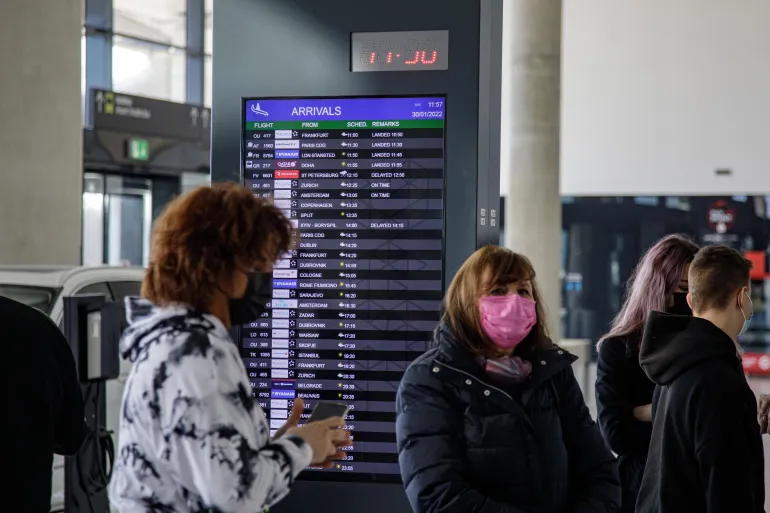
Sarajevo’s departure board is a dynamic tapestry of destinations, airlines and times. From the early morning hours when the first flights taxi into position to late‑day departures that carry passengers toward evening adventures, each scheduled departure is a chapter in the airport’s daily rhythm.
In the cool hush before sunrise, a handful of flights begin the day’s departures. Often these early services connect Sarajevo to nearby European hubs like Vienna or Zagreb, enabling business travellers and early risers to begin their journeys while the rest of the city still sleeps. As dawn unfolds and the light spreads across the valley, the departure terminal gradually awakens with activity — passengers queue at check‑in desks, parents say their goodbyes, and backpacks surge through security screening.
By mid‑morning and early afternoon, a broader array of flights populate the departure list, including flights to major European cities like Frankfurt and Zurich, connections to Istanbul in Turkiye, and low‑fare services to cities across Western, Northern and Southern Europe. Each of these departures carries a distinct purpose — someone heading to a conference, another traveller off to meet old friends, a family bound for a holiday, or a student returning to study.
The Symbolism of Departure
A departure at Sarajevo Airport is far more than a mechanical event; it is a moment laden with emotion and intention. Consider the traveller stepping off the curb in the drop‑off lane — luggage in hand, passport in pocket, last glances cast toward the city skyline. The building’s façade hides a flurry of internal processes: baggage handling, aircraft servicing, boarding calls, micro‑adjustments of fuel and crew assignments.
The departure lounge is also a theatre of stories. Passengers drift through cafés, grab last‑minute snacks, or sit in quiet anticipation as their flight time approaches. Somewhere in the hum of announcements and rolling suitcases, there are silent personal vows: promises to return, resolutions for new beginnings, hopes of reconnection.
Airlines and Routes — A Web of Choices
The pattern of departures out of Sarajevo reflects a network of scheduled services that link the city with many parts of Europe, the Middle East, and further abroad. Some flights depart multiple times per week to the same destination; others may be daily scheduled routes. The diversity of flights and airlines illustrates Sarajevo’s evolving role as an accessible hub within the continent’s aviation map.
Throughout the week, the airport operates dozens of scheduled take‑offs toward destinations such as Istanbul, Frankfurt, Zurich, Brussels, Belgrade, and Rome, among others. From Sarajevo’s runway, aircraft depart to serve carriers that range from full‑service international airlines to popular low‑cost operators. For a passenger, this range offers both choice and flexibility — from premium services to budget‑minded options — all within reach of the city’s valley landscape.
The Ritual of Departure
The departure process itself is a ritual that most seasoned travellers know well: check‑in, security screening, passport control, waiting lounges, gate calls. Yet for many at Sarajevo Airport, these steps carry a unique resonance.
Families hug goodbye in the check‑in hall, friends wave from a distance near the entrance, and even regular business travellers carry a sense of gravity as they walk through the automatic doors toward the gates. The departure announcement – crisp, measured and calm – signals not just that a flight is imminent, but that a human story is unfolding.
Some flights are scheduled for late evening departures, filling the night sky with aircraft rising into the darkness, bound for far‑off places. Others depart at midday, slicing through the afternoon light toward destinations that span time zones and cultures.
Seasonality and Flow
Like the city it serves, the departures schedule at Sarajevo changes with the seasons. In summer months, the airport may schedule increased flights to leisure destinations and accommodate additional charter services. Winter schedules, while often leaner, reflect steady demand for seasonal travel and connections to cultural and business centres across Europe.
This seasonality also affects how travellers plan their departures — not just in terms of price and seat availability, but how they align their travel with weather, holidays, and events. In Sarajevo’s valley, where mountain weather can shift quickly, a change in conditions sometimes influences flight timings, reminding travellers that the natural world remains a powerful counterpart to human mobility.
Beyond the Runway
Once a plane has departed — wheels lifting off the tarmac, engines humming, altitude rising — the departure process is incomplete only in the physical sense. Spiritually and emotionally, the traveller carries with them Sarajevo’s imprint: the memory of narrow streets, of luminous riverbanks, of hills that greet every sunrise.
The departure schedule, then, is more than a list of flights. It is a mirror of Sarajevo’s ties to the world — an expression of who flies out, where they go, and how the city is woven into a global mesh of movement. It is a testament that every departure is both an ending and a beginning.
Each scheduled take‑off is a living link from Sarajevo to distant horizons — an affirmation not just of flight, but of human curiosity and connection.