Air passenger traffic in this region began even before the Second World War. In 1930, the Belgrade–Sarajevo–Podgorica route was opened. Smaller passenger aircraft were used, and during that period the military airfield in Rajlovac was utilized. Civil air transport was operated by the Belgrade-based airline Aeroput, using French-made Potez 29 aircraft.
The outbreak of the Second World War caused the suspension of all civil aviation activities throughout the territory of the then Kingdom of Yugoslavia. After the end of the war, practically from 1947, regular civil air traffic to Sarajevo was re-established on routes between Sarajevo, Belgrade, and Zagreb. Operations were carried out by the new Yugoslav–Soviet company JUSTA, which used the Butmir airfield for its activities. This company operated for just over a year, as a result of the conflict with the USSR and a decision by the Government of the then Federal People’s Republic of Yugoslavia (FPRY) to establish a domestic airline, Jugoslovenski Aerotransport, better known as JAT. The backbone of JAT’s fleet at that time consisted of Dakota (DC-3) aircraft with 24 passenger seats. The legendary DC-3 remained in service for the following 22 years.
Due to growing needs and the introduction of new jet aircraft types, which required solid concrete maneuvering surfaces, the idea of building a new Sarajevo airport was put into motion. After years of analyses and examinations of possible locations, it was decided that the airport would be situated in the Sarajevo Field, in close proximity to the existing grass airfield at Butmir. Construction began at the end of 1965 and lasted slightly more than three years. The necessary airport infrastructure was built: runway, taxiways, apron, and a modest terminal and administrative building. The control tower was also part of the airport building. The radio-navigation (R/NAV) equipment enabled the acceptance of all aircraft types up to category C, including night operations and operations in complex meteorological conditions (VFR and IFR flights).
Finally, on 2 June 1969, Sarajevo–Ilidža Airport, as it was officially called at the time, was ceremonially opened for civil air traffic.
The opening of the new international airport also meant opening new paths and opportunities for the development of civil aviation. Passenger and aircraft traffic increased gradually each year, but Sarajevo Airport still had the role of a “feeding airport,” providing passengers to the airports in Belgrade and Zagreb.
With Sarajevo’s candidacy for the 1984 Winter Olympic Games (WOG ’84), the need arose to expand the airport’s basic capacities: extension of the existing runway, construction of a new parallel taxiway, a new terminal, and a new Air Traffic Control building with a new control tower. At the same time, possibilities were sought to install new R/NAV equipment to reduce operational minima and thus increase the frequency of landing and takeoff procedures. This demanding concept was realized before the start of WOG ’84. The runway was extended by 150 meters, a new taxiway was made operational, and the apron was expanded. A complete new runway, approach, and taxiway lighting system was installed, planned R/NAV equipment was procured (three VORs and a new ILS), and finally a new, highly functional terminal building was constructed. The terminal was equipped with all facilities typical of international airports. With this, Sarajevo Airport ranked among the best-equipped airports in this part of Europe. Technologically and in terms of staff, it was fully prepared to welcome the start of the Games.
During the Games and shortly before their opening, traffic intensified, with between 50 and 70 flight operations carried out daily. For the first time, JAT’s largest passenger aircraft, the DC-10, landed on a direct flight from New York. In addition, landings of large intercontinental aircraft such as the L-1011 Tristar, B-707, DC-8, and many others were recorded. It is important to emphasize that on the last day of WOG ’84 a record daily traffic was achieved: around 14,000 passengers were handled without any delays or service errors.
Until the beginning of the aggression against Bosnia and Herzegovina, traffic continued to increase. A special contribution was made by the local charter airline AIR COMMERCE, which transported more than 40,000 passengers between October 1991 and March 1992.
Shortly before the aggression itself, UNPROFOR units, so-called peacekeepers, arrived at the airport. A motorized unit of the Canadian army was stationed there. Those who, in some way, knew about and prepared for the aggression relocated their families from Sarajevo. Families of JNA members departed on military aircraft, leaving Sarajevo by air as the safest mode of transport due to “log barricades” on the roads. Foreign nationals also departed.
The aggression officially began, in a way, with the occupation of Sarajevo Airport, which was seized by units of the former JNA. On the night of 4–5 April 1992, the JNA—members of the Air Force Academy from Rajlovac—took control of the airport and held it until mid-June, when it was handed over to Serbian paramilitary units. After taking over the airport, these units began widespread looting and destruction of equipment, radio-navigation aids, and everything else that could not be transported to Belgrade or territories under Serbian control.
A sad period followed. All civil flying was completely suspended.
UNPROFOR units that remained at the airport gradually began restoring military air traffic. The mandate for this was given to the French Air Force as part of the detached aviation unit French DETAIR. The airport now served exclusively military forces and, partly, humanitarian flights to supply Sarajevo’s population with essential necessities. Evacuations of seriously ill and wounded civilians were also occasionally carried out, as well as transport of various “peace” delegations.
Between 1992 and 1995, the longest-lasting humanitarian airlift in history for supplying a besieged city was conducted. With nearly 13,000 flights over a period of more than three years, both the scale and duration far exceeded the airlift established by the Western Allies after the Second World War to supply West Berlin.
Before the construction of the wartime facility DB (the Dobrinja–Butmir tunnel) beneath the runway of Sarajevo Airport, more than 800 people lost their lives within the airport complex. This was the result of civilians running across the runway out of sheer necessity to obtain basic food supplies available in the free areas of Butmir and Hrasnica. Serbian paramilitary units positioned in the immediate vicinity of the airport mercilessly fired at any civilian who, out of desperation, attempted to cross to the other side of the airport.
From April 1996, parts of the airport came under the management of the civilian authorities of Bosnia and Herzegovina. From that moment began the struggle to restore Sarajevo Airport’s true purpose—civil aviation. Part of the used equipment was donated to the airport, the sorting facility was repaired and converted into an improvised terminal. After short training in Turkey, employees returned to their long-awaited jobs, and progress slowly resumed.
Sarajevo Airport was opened for civil traffic on 15 August 1996. This event represented the fulfillment of the greatest dream of all employees.
Immediately after reopening, Croatia Airlines established a connection between Sarajevo and Zagreb, and the Turkish company Top Air between Sarajevo and Istanbul. By the end of that year, Sarajevo Airport handled 26,000 passengers and was the only airport in Bosnia and Herzegovina operating in civil aviation. All maneuvering areas, technical airport facilities, and the air traffic control building with its control tower were rehabilitated.
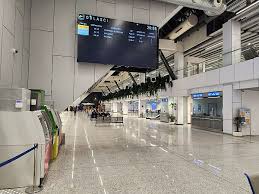
A general reconstruction of the terminal building, with completely new technology and top-quality equipment, was successfully completed in early 2001. With the ceremonial opening in March 2001, the airport completed all facilities in terms of passenger needs and comfort, officially marking the beginning of a new era of high-quality operations and outstanding results.
Sarajevo, as the capital city and the seat of a large number of embassies, became an attractive destination for many well-known airlines. The professional approach of Sarajevo Airport to its operations has been recognized by many carriers—Lufthansa, Austrian Airlines, Turkish Airlines, Adria Airways, Croatia Airlines, Germanwings, and others—with whom we have cooperated for years to mutual satisfaction.
Today, with around 400 employees, more than 600,000 passengers per year, over 7,000 flight operations, and more than two million kilograms of cargo transported, we can say that the old legend of the phoenix has, in our case, become reality—we have risen from the ashes of war to the technological and operational maximum to which aviation aspires.